
How Small Business Owners Can Attract Busy Clients and Build Loyalty
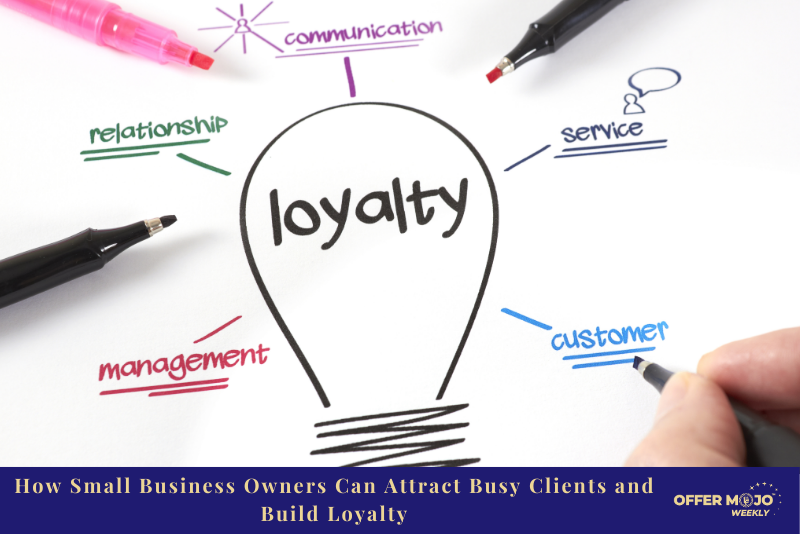
Small business owners and new startup founders are trying to earn busy client attention in a world where people scroll fast, compare faster, and postpone decisions without a second thought. That makes client acquisition feel unpredictable: the offer looks solid, the service delivers, yet inquiries come in bursts and bookings don’t stick. The real tension is that most marketing mistakes aren’t loud, they’re small gaps in clarity, follow-through, and trust that busy clients notice instantly. With a few smart, scrappy entrepreneurial marketing strategies, business owners can get seen, get chosen, and start building loyalty.
Quick Summary: Attract Busy Clients, Keep Them Loyal
Offer loyalty perks and clear program benefits to reward repeat clients and boost retention.
Encourage referral marketing with simple incentives that make sharing your business easy.
Use social media client interaction to stay visible and respond quickly to client needs.
Focus on client engagement strategies that help busy people choose you faster and return more often.
Understanding Busy Buyers and Easy “Yes” Offers
Busy clients decide fast. They default to what feels simple, relevant, and low-effort. That is why client-centric marketing keeps the heart of every marketing effort focused on the buyer’s needs, not your full menu. Basic market segmentation just means grouping people by one or two meaningful differences so you can personalize without overcomplicating.
This matters for coaches and service experts because “more options” often lowers conversions. When your message matches a client’s situation, fewer questions show up, and sales calls shorten. Strong client experience also makes rebooking feel like the obvious next step.
Picture a prospect who wants results, not homework. A “busy parent” offer with two time slots and one clear outcome beats a long list of packages. They can say yes in seconds because the path is already chosen for them.
Do This Next: A Beginner Playbook to Attract and Keep Clients
Busy buyers say “yes” when your offer feels effortless and low-risk. Use the playbook below to make your service easier to choose, easier to start, and easier to stick with.
Tighten your “fast-response” customer service: Pick one simple standard and stick to it: reply to every inquiry within 1 business day (even if it’s just “Got it, answer coming by 3pm tomorrow”). Add a short intake form so you can personalize quickly (goal, timeline, biggest obstacle), which supports the “easy yes” experience from the start. Then set a clear first step, “Book a 15-minute fit call” or “Choose a start date”, so people aren’t left wondering what to do.
Put a one-sentence promise on every offer: Write one line that makes the outcome and timeframe obvious, plus who it’s for (light segmentation). Example: “In 4 weeks, help first-time managers run confident 1:1s, without rewriting your whole schedule.” This works because busy clients scan, not study; a clear promise reduces decision fatigue and boosts conversions. Add it to your website header, booking page, and proposal templates today.
Launch a “simple loyalty” rewards program (no points required): Choose one repeat-friendly reward you can sustain for 90 days: $25 off a follow-up session, a free 15-minute check-in, or priority scheduling after three paid sessions. Keep the rules short and visible: “After 3 sessions, you unlock X.” Loyalty works because it gives returning clients a reason to come back now, not “someday,” and it makes your service feel like a relationship, not a one-off transaction.
Set up a referral program with one ask + one script: Referrals happen when you make them easy and specific. Create a tiny referral offer: “Send a friend, and you both get $30 credit” or “They get 10% off, you get a bonus check-in.” Then message happy clients with a script: “If you know a coach who wants help with [problem], I can take 2 new clients this month, want me to send a one-paragraph intro you can forward?”
Collect feedback in a 2-minute loop (and actually use it): After every project milestone, send three questions: “What’s working?”, “What’s confusing?”, “What would make this easier?” This protects the “effortless yes” feeling by catching friction early, before it becomes a cancellation. Share one change you’re making (“I added a checklist so you know what to do between sessions”) so clients feel heard and your service keeps improving.
Show up on social media with a weekly ‘proof + next step’ routine: Pick one platform and post 3 times per week: one quick tip, one client win (no private details), and one invitation (“Comment ‘PLAN’ and I’ll send my 5-step checklist”). Busy clients need repeated, low-effort reminders that you solve a specific problem. Keep every post tied to your one-sentence promise so your marketing stays consistent and beginner-friendly.
Quick Answers for Busy Buyers and Loyal Clients
Q: What are the most effective ways to quickly capture the attention of clients who have very little time?
A: Lead with a one-line outcome plus timeframe, then give a single next step like “book” or “reply YES.” Remove extra choices by offering one primary package and one clear starting point. If you are unsure what to fix first, treat measurement as a bonus since 40.2% of marketers say real-time analytics is their ultimate challenge.
Q: How can small business owners create a loyalty program that genuinely encourages repeat clients
A: Tie the reward to what returning clients actually want: convenience, speed, or a small upgrade. Keep rules memorable, such as “after three visits, you unlock priority booking.” Review it after 30 days and adjust one lever only.
Q: What are practical methods to gather and use client feedback without overwhelming my daily operations?
A: Use a three-question check-in after key moments, then log answers in one running note. Pick one recurring friction point and change one thing this week, like a clearer checklist or reminder. Close the loop by telling clients what you improved.
Q: How can engaging with clients on social media contribute to building long-term loyalty?
A: Social builds familiarity, and familiarity lowers perceived risk when people are in a hurry. Consistent posts that show proof, a useful tip, and a simple invitation keep you top of mind. It helps that 96% of U.S. small businesses utilize social media as part of branding and revenue generating strategies, so your audience already expects to find you there.
Q: What steps can I take if I feel stuck or overwhelmed trying to develop a clear strategy for growing my business and keeping clients happy?
A: Start by diagnosing one bottleneck: attention, trust, follow-through, or repeat business. Run a 7-day micro-test with one change, then keep what moved inquiries, bookings, or renewals. If you want a structured learning path, exploring a master of business administration program is one option.
Turn Busy Buyers Into Loyal Clients With One Weekly Win
Busy clients want answers and confidence fast, but small businesses often get stuck guessing which marketing strategies will actually move the needle. The simplest approach is steady implementation: diagnose the real friction, test one clear change, and let results, not opinions, guide the next step. When that becomes the habit, sales conversion improves, client loyalty building feels natural, and business growth stops feeling like luck. Choose one move, run it for seven days, and measure what changes. Pick one strategy from above, implement it in a small way this week, and track one metric like replies, bookings, or repeat purchases. That visible progress is what keeps small business success tips sustainable and resilience growing over time.
