
Your CliffsNotes Guide to Starting Your First Podcast Show
So you’re starting your first podcast. That's a good decision! Over the last couple of years, podcasts have become one of the (if not THE) primary ways people consume information. As a podcast host myself, I can say with confidence that podcasts are a GREAT way to build authority, connect with others, and reach new audiences–fast.
While understanding all the ins and outs of running a successful podcast can be quite complex, we can make it easier for you.
When I helped my existing client launch their first podcast, I spent close to six hours scouring the internet for the best podcasting practices. It was my first time too, and I didn’t want to leave any stone unturned. In addition, Joe Schum, a former client of mine, was generous enough to share the expertise he gained from being a member of an elite podcasting mastermind.
Since then, I’ve come a long way with podcasting. In addition to my own podcast, my agency, On A Mission Brands, has a very robust system in place to help mission-driven brands launch and manage their podcasts. Along the way, we have gathered a wealth of podcast knowledge for you.
Rather than providing you with an 11-page report on the many details you need to know, I thought I’d share with you the CliffNotes version of this knowledge.
Below are the big picture steps you should consider and implement to launch a successful first podcast.
Step 1 - Have a Clear Vision for Your Podcast
Any business idea needs to have a clear vision, or you will flounder and waste time running in too many different directions. Before you start, you need to define:
Your target market or niche - who is your podcast aimed at?
The format of your podcast - what format will you use? Educational? Entertainment? Guest Experts?
The main theme or topic for your podcast - what are you going to talk about or teach on?
The name of your podcast - this is important, especially as it relates to SEO
The length of your podcast - short version (15 minutes), long version (45-60 minutes)
Publishing schedule - how often will you publish? Weekly? Monthly?
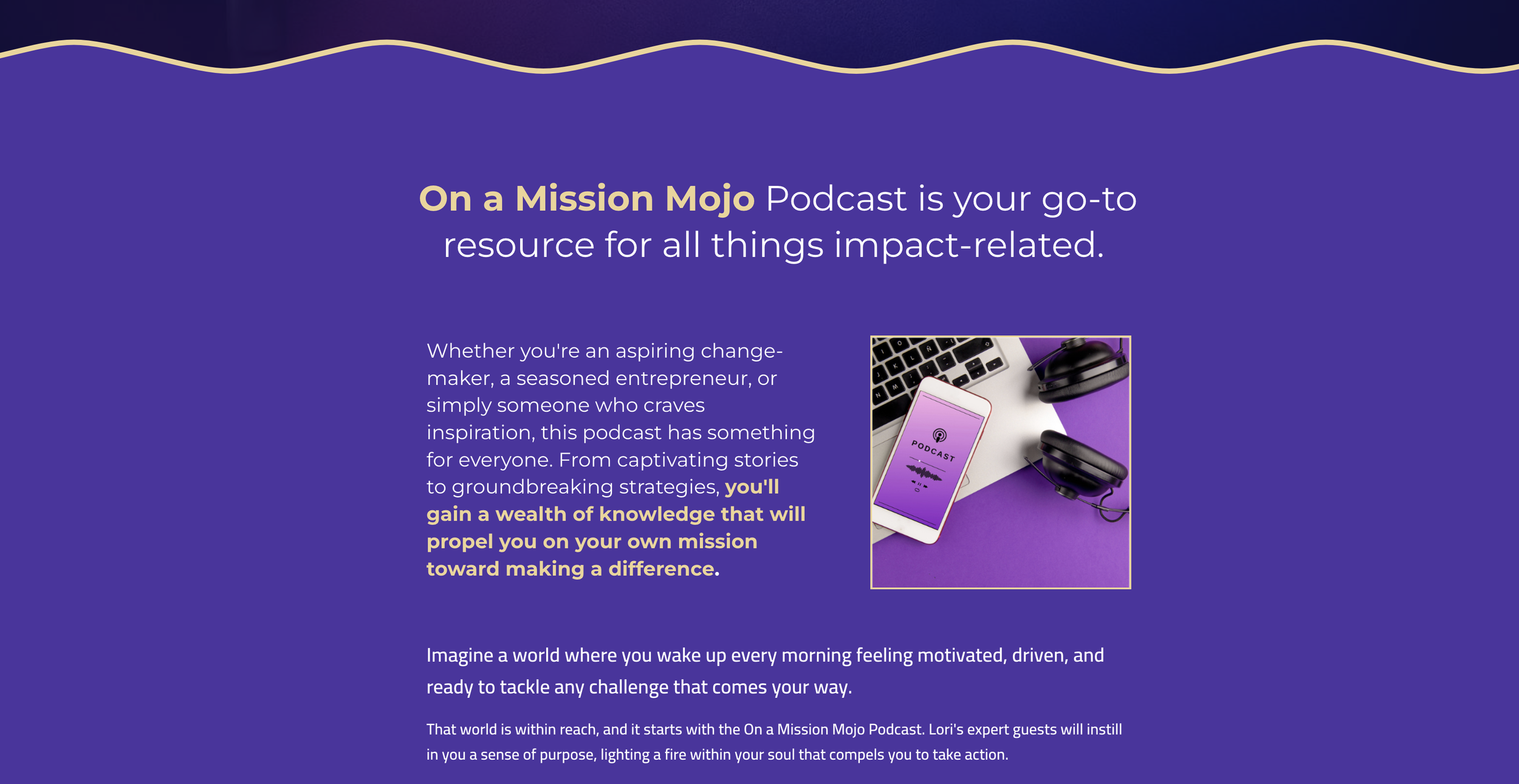
The image below clearly explains my Vision for the podcast. Also, if you click on it, it will lead you to said podcast😉
Step 2 - Plan Your Podcast Launch
There are a lot of moving pieces that need to be considered before you can officially launch your podcast. Having a detailed and well-thought-out launch plan is essential to your success. Elements that must be considered for your podcast launch are:
Team members needed for the launch
A detailed process your team can follow
Launch date and individual dates for each task involved
Set-up and planning phase of the launch
Pre-launch activities
Promotional activities during the launch
Technical tasks that need to be completed
Post-launch and podcast growth plan
Step 3 - Before Starting Your First Podcast, Plan Your Content
When you launch your first podcast, it’s important to have a few episodes recorded and ready to go. Depending on the type of podcast you are going to do, additional research may be needed. For instance, if you plan to have guest speakers on your podcast, do the legwork up front to gather a list of potential guest speakers.
If you will be the only one contributing to your podcast, prepare a list of topics that you can speak about. Begin the process of planning your editorial calendar so you can begin writing your content. Aim to create a minimum 3-month plan.
Step 4 - Start Scheduling Guests or Writing Content
If you decide to have guest speakers, you will need to start lining up your guest experts. Reach out to the people on your research list and schedule introductory calls. Talk to them about your podcast and ask if they’d like to be a guest.
Develop your process for onboarding new guest speakers and start getting people booked in the calendar. Gather all the information you will need to promote the speakers. Build out your editorial calendar so you know what’s coming up.

Step 5 - Purchase Equipment
Audio and/or video quality is critical when recording a podcast. When you are recording the podcast alone, you have a lot more control of your environment. However, when you are working with remote guests, there are variables that are harder to control. Here is a short list of equipment that will be necessary to create a high-quality podcast.
A computer - this one is obvious. The newer the better.
A high-quality microphone with a stable mount and pop filter/windscreen
A pair of closed-back headphones (not earbuds)
An audio interface that acts as the bridge between your microphone and your computer
A mixer to help you control input and output levels
Any cables necessary for setup
Ask your guests to wear earbuds and possibly a lapel microphone
Step 6 - Research and Select Your Software
Not only do you need the proper hardware listed above, but you also need software programs to get started. Do your research and pick what works for you.
Recording software - many people use Zoom or Skype for their recording tool, especially if they have remote guests. My personal favorite, however, is Riverside.fm.
Audio editing software (if you are doing the editing in-house) - popular audio editing software includes Audacity, GarageBand, and Adobe Audition
Royalty-free music site to purchase music for your intros and outros - A good one is Epidemic Sound
Podcast Hosting Company - just like you need a website hosting company, you will also need a media hosting company. We use Buzzsprout to host the podcast and distribute out to the major podcast platforms.Other platforms you can use are, Transistor and Podbean
Step 7 - Set Up Your Podcasting Environment
Now that you have all your hardware and software selected, it’s time to set up your podcasting environment.
Set up all your equipment and test it
Set up your podcast hosting site
Set up your RSS feed so you can serve up to sites like iTunes, Stitcher, Rhapsody, and Google Play
Set up Zoom and make sure you are hard-wired into the internet
Make sure you understand how to edit your files and record your intros and outros
Record a test episode and test everything from beginning to end
Step 8 - Prepare Your Marketing Materials
By this time, you might feel exhausted with everything that is required to start a podcast. No one said it’s for the faint of heart. This must be something you enjoy to keep the momentum going. In order for your podcast to be successful, not only do you need to consistently publish, you will need to brand and market your show. There are several pieces that will be essential for your podcast marketing plan.
Episode show notes, keeping in mind SEO - this includes a catchy headline, a one-line description, a summary of the episode, and highlights to listen for throughout the episode (we love Deciphr, an AI tool, for creating show notes)
Graphics to promote your podcast, like cover image, podcast logo, episode image, and social media graphics
Social media posts to promote the podcast
We use Riverside to record podcast interviews, create video clips, and download the transcript.
Tools like descript can help you transcribe your podcast episodes into text, making it easy to produce blog posts or articles from your podcast content.
Step 9 - Launch Your Podcast
This is the exciting day when your podcast goes live - when you start sharing your content with your audience. Aim for launching with a minimum of three episodes. Build the hype early within your community. Announce the podcast in your email list. Notify all your social media followers. Gather some early supporters to leave ratings and share on their platforms. Build that core group early. And most of all, have fun!
Step 10 - Build Your Audience
If you don’t have an audience to speak to, you will quickly lose interest in podcasting. But don’t give up. There are lots of strategies you can use to start growing your listener base. Here are a few you can try in the beginning.
Take listener questions in between episodes and work those questions into future episodes
Do guest appearances on other podcasts - with audiences similar to your own
Cross-promote with other podcasters - you promote their podcast and they promote yours
Promote on your email list and through all your social media channels
Do giveaways that engage your listeners
Consider paid advertising for your podcast
There you have it. Follow these 10 steps to launch your first podcast. Not only will you meet lots of great people on this journey, you will establish yourself as an expert, increase your audience reach, and ultimately grow your business.
The only caveat…you really need to like recording podcasts, be committed to it, and do it right.
If you are looking for someone to help you launch your first podcast, let’s chat. On a Mission Brands is dedicated to helping mission-driven entrepreneurs and organizations capture and captivate their target audience with beautiful, engaging, and memorable brands. Let us guide you in implementing a seamless and strategic approach to sharing your expertise through hosting your very own podcast.
